Monday Dreamer: A Playful Handwritten Font for Crafters
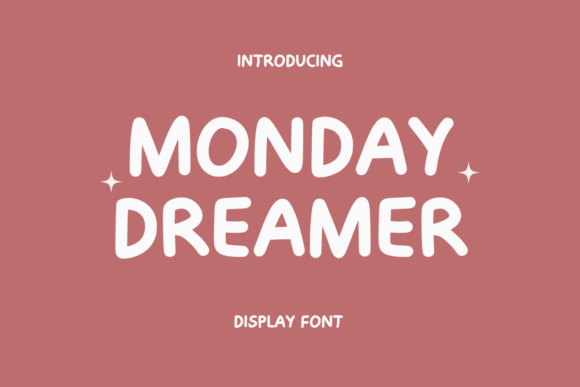
When I first opened Monday Dreamer, I smiled. It has that rare quality where the letters feel like they were written by a friend sipping coffee on a Monday morning—bouncy, a little imperfect, and completely charming. The strokes are playful without being childish, and the slightly uneven baseline gives it a warmth that purely geometric fonts can never match. For anyone who makes physical products, this is the kind of handwritten font that turns a simple label into a keepsake.
Its visual personality sits comfortably between a casual script font and a friendly display font. The letterforms are rounded and open, with easy-to-read loops and a lighthearted rhythm. The descenders have a gentle swing, and the ascenders curve with a natural flick. It feels fresh, like modern typography that still honors the beauty of real handwriting. That emotional appeal matters—customers often choose a handmade item because they want to feel a human connection, and Monday Dreamer delivers that instantly.
When a Font Becomes Your Brand’s Voice
Consistency is everything in a small shop. Your product labels, your social media graphics, your packaging inserts—they all talk to each other. I started using Monday Dreamer on my candle labels, and suddenly everything felt cohesive. The name of the scent, written in that cute script, made the jar look like it belonged in a boutique. Then I used it on my thank-you tags, and the whole unboxing experience felt warmer. A handwritten font can act as your brand’s signature, and Monday Dreamer is distinctive enough to be recognizable without being overbearing.
It also helps with perceived quality. A carefully chosen typeface on product packaging suggests that you care about the details. When I swapped out a generic serif font for Monday Dreamer on my soap wrappers, customers commented on how “premium” the new labels looked. The font’s organic flow softens the edges of a box or a bag, making mass-produced containers feel like they were wrapped by hand.
Real Projects Where Monday Dreamer Shines
I’ve tested this font across dozens of applications, and it’s proven remarkably versatile. Here are a few places where it truly excels:
- Candle Labels and Cosmetics: The playful curves complement a minimalist jar, and the readability holds up beautifully on a 2-inch round label.
- Birthday Invitations and Party Stationery: Whether it’s a child’s balloon-themed card or a grown-up casual dinner invite, the font adds a celebratory feel without being too frilly.
- Farmhouse Signs and Wall Art: I’ve used it on wooden welcome boards and canvas prints, and the slightly rustic, hand-painted look works perfectly with neutral palettes.
- Wedding Welcome Boards and Seating Charts: For couples wanting a relaxed, boho vibe, Monday Dreamer feels like a live calligrapher’s work—especially when you enlarge it for a statement piece.
- Printable Wall Art and Digital Downloads: In my Etsy shop, I sell quote prints, and this font has become a bestseller for inspirational phrases. It reads cleanly on screen and in print.
- Boutique Tags and Garment Labels: I’ve seen it on hang tags for handmade clothing, and it gives a soft, approachable look that pairs well with kraft paper and twine.
- Holiday Product Packaging: From Christmas cookie boxes to Mother’s Day gift sets, the font adapts to seasonal designs without losing its personality.
In each of these cases, the font is used for short, high-impact phrases—names, titles, decorative wording. That’s where Monday Dreamer really shines. It’s a display font at heart, meant to draw the eye. Longer passages of text, like a full paragraph on a product insert, can become slightly tiring to read because of the handwritten style. For those, I recommend pairing it with a clean, simple typeface for body copy.
Readability Tips for Cutting Machines and Small Formats
If you run a Cricut or Silhouette machine, you know that not every beautiful font cuts well. I tested Monday Dreamer on a few sticker sheets and vinyl decals, and here’s what I learned. At sizes above half an inch, the letters are sturdy enough to weed without frustration. The connections between characters are smooth, so the script flows without breaking. However, if you try to cut it really small—say, under a quarter inch for a tiny product label—some of the thinner loops might tear. For those micro-labels, I’d suggest using a sans serif font for the fine print and saving Monday Dreamer for the main name.
For printed cards and mockup previews, the font stays crisp at 12 points and above. I always do a test print on the exact paper stock I’ll use, because the texture can affect how the thins and thicks appear. On matte sticker paper, it looks soft and friendly; on glossy cardstock, it pops with a bit more energy.
Pairing Monday Dreamer with Complementary Fonts
One of my favorite things about this font is how well it plays with others. Because it’s so expressive, it needs a partner that can step back and let it lead. I often set the main phrase in Monday Dreamer and then use a clean sans serif font for the secondary details. For example, on a wedding invitation, the couple’s names might be in Monday Dreamer, while the date and location sit beneath in a simple geometric sans. The contrast makes the whole design feel intentional and balanced.
If you’re going for a more traditional look, try pairing it with a light serif font. The combination of a playful handwritten font and a classic serif creates a lovely tension—perfect for high-end stationery or a boutique hang tag. I’ve also used it alongside a bold display font for signs where I want the main word to scream “handmade” and the supporting text to ground the message. The key is to avoid another script font; two scripts can compete and make the design feel chaotic.
What to Check in Your Font Files
Whenever I add a new font to my design toolkit, I look for a few practical things. Monday Dreamer is a cute and playful handwritten font, and from my experience, it’s well-constructed. I’d recommend checking the glyphs panel for any extras—alternates, ligatures, or swashes that let you customise the look. A few alternate characters can completely change the rhythm of a word, making your product labels feel even more unique.
Also, confirm the file formats. OTF files often include advanced typographic features, while TTF files are widely compatible. If you serve international customers, you’ll want to verify multilingual support. I’ve used Monday Dreamer for words with accents and special characters, and it has handled them gracefully, but it’s always wise to test before you commit to a large print run.
Commercial Licensing for Your Handmade Business
Nothing stalls a creative project like a licensing grey area. I always make sure a font is cleared for commercial use before I put it on anything I sell. Monday Dreamer is a premium font that typically comes with a license allowing you to use it on physical products, digital downloads, and even SVG designs for crafting. That means you can confidently sell invitations, stickers, T-shirts, tote bags, mugs, and printable wall art without worrying about infringement.
If you create templates for clients or sell digital products that include the font file itself, you’ll need to double-check the EULA. Some licenses restrict embedding the font or distributing it in editable formats. For standard merchandise, though, the commercial license has you covered. I print my product packaging with Monday Dreamer, use it on my website banners, and include it in my social media graphics—all within the typical terms.
How a Single Font Shifts Your Shop’s Vibe
Since I started using Monday Dreamer, my shop photos have a more cohesive look. The font appears on my thank-you cards, my logo, my price tags, and my seasonal gift sets. It’s not just a typeface; it’s become part of my brand identity. Customers recognise the style, and that recognition builds trust. When they see that familiar, bouncy handwriting on my Instagram stories or in a new product listing, they know it’s me.
This font also saves me time. I used to hand-letter the names on my candle labels, but that was slow and inconsistent. Monday Dreamer captures the same handmade feel without the shaky lines. I can type, adjust, and print, and the result looks like I spent hours with a brush pen. It’s a clever shortcut for any maker who wants to look professional but still keep that personal, small-batch charm.
For anyone building a craft business, a font like Monday Dreamer is more than a design asset. It’s a tool that helps you tell your story, one product at a time. Whether you’re creating a single birthday card or a whole line of boutique merchandise, this playful handwritten font will help your work stand out in a sea of mass-produced sameness.